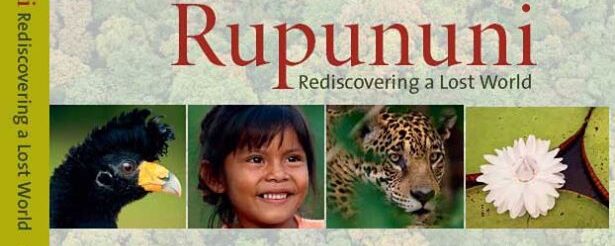
The Rupununi is a biological treasure trove. More than 1,400 vertebrate species inhabit the region. This richness is comparable to Western Amazonia, the most diverse place on Earth. This extraordinary diversity stems from three factors. The first is the meeting of Amazonian and Guiana Shield faunas at the continent’s edge. The second is the remarkable variety of habitats, ranging from open savanna to montane rainforest. The third factor is the seasonal flood cycle, creating one of the world’s great freshwater ecosystems.
The Seasonally Flooded Wetlands
The annual flood is the Rupununi’s defining ecological event. During the wet season, rainfall raises water levels by up to 15 meters. This rise transforms flat savannas into an inland sea that stretches to the horizon. Fish spread across the flooded plains to feed and spawn. Aquatic birds — herons, ibis, jacanas, and storks — follow the fish in their millions. Giant river turtles nest on exposed sandbanks. When the waters recede, concentrations of fish in shrinking pools sustain both human communities and the region’s predators.
The North Rupununi Wetlands are recognized internationally for their importance to waterbirds. They are crucial for freshwater biodiversity. These wetlands form a critical ecological link between the Kanuku Mountains and the Essequibo River.
The Forest
Forests cover the Kanuku Mountains and Iwokrama to the north, providing habitat for species that can’t survive in open savanna. The Iwokrama Forest is a protected tropical rainforest covering 1 million acres in the center of Guyana. It hosts over 1,500 plant species. There are more than 500 bird species. It includes 420 fish species and 200 mammal species. Six new species have been discovered within its boundaries. FSC certification, held since 2016, confirms its status as a model for sustainable tropical forest management.
The forests of the Kanuku Mountains support the highest biodiversity in Guyana. They sustain more than half of the country’s bird species. Conservation International recognizes the Kanukus as one of the last remaining pristine Amazonian habitats.
The Savanna
The Rupununi savannas support a distinctive suite of large mammals adapted to open grassland. The giant anteater (Myrmecophaga tridactyla), threatened across much of its range, maintains healthy populations here. The giant armadillo — the largest armadillo in the world, growing to 1.5 meters — is rarely seen but still exists. Savannah deer and crab-eating foxes are part of a savanna fauna found nowhere else in Guyana.
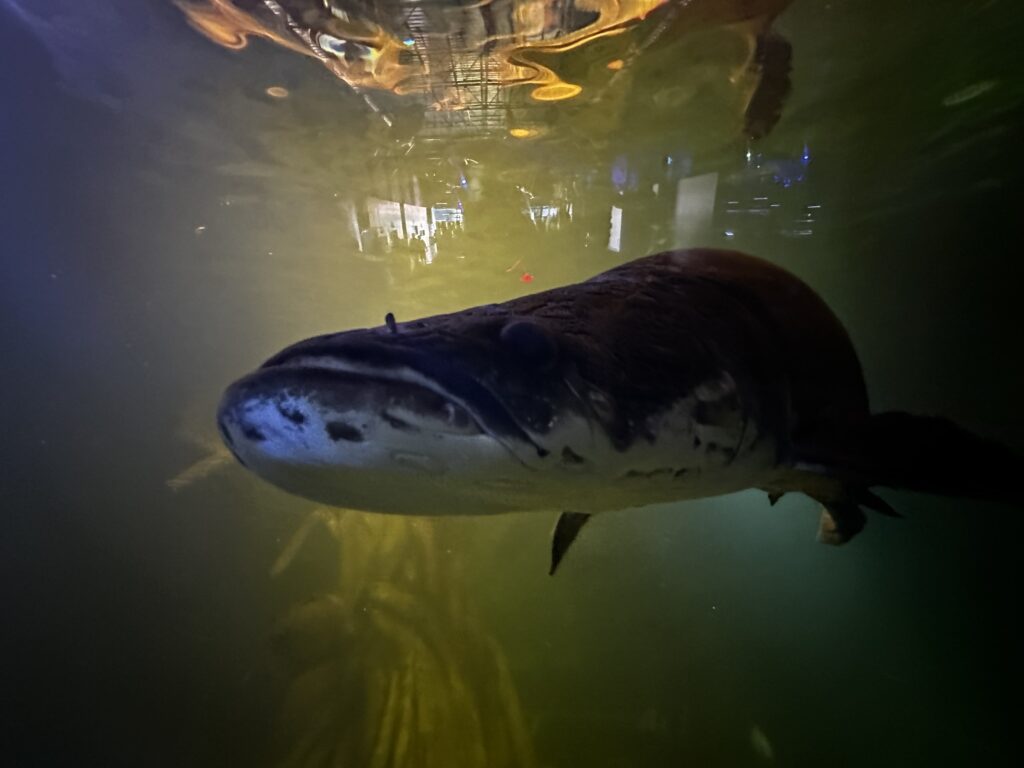
Arapaima (Arapaima gigas)
The arapaima is one of the world’s largest freshwater fish, growing to over three meters and weighing more than 200 kilograms. It breathes air, surfacing every few minutes, and constructs nests on floodplain edges. Heavily overfished across Amazonia, arapaima have recovered in the Rupununi through community-based management led by the North Rupununi Development Board. The Rupununi arapaima management program is now cited internationally as a model for community-led fisheries conservation.
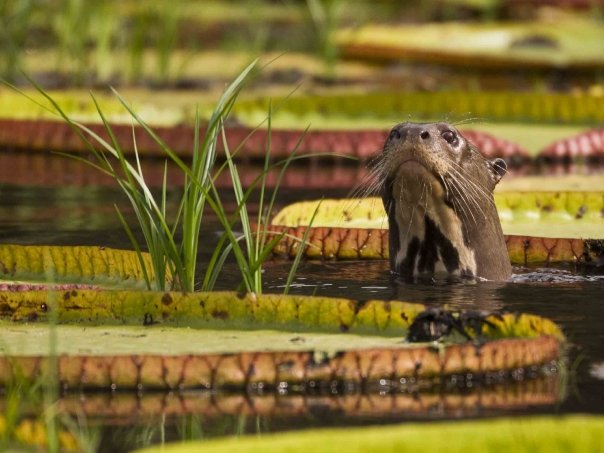
Giant River Otter (Pteronura brasiliensis)
At up to 1.8 meters long, the giant river otter is the world’s largest mustelid — a family that also includes weasels, badgers, and wolverines. It lives in close family groups of up to nine animals, fishing cooperatively in rivers and lakes. Hunted near to extinction for its pelt by the 1970s, the giant river otter recovered in the Rupununi, where Diane McTurk of Karanambu pioneered otter rehabilitation for decades. Healthy populations now occupy the Rupununi River and its tributaries.
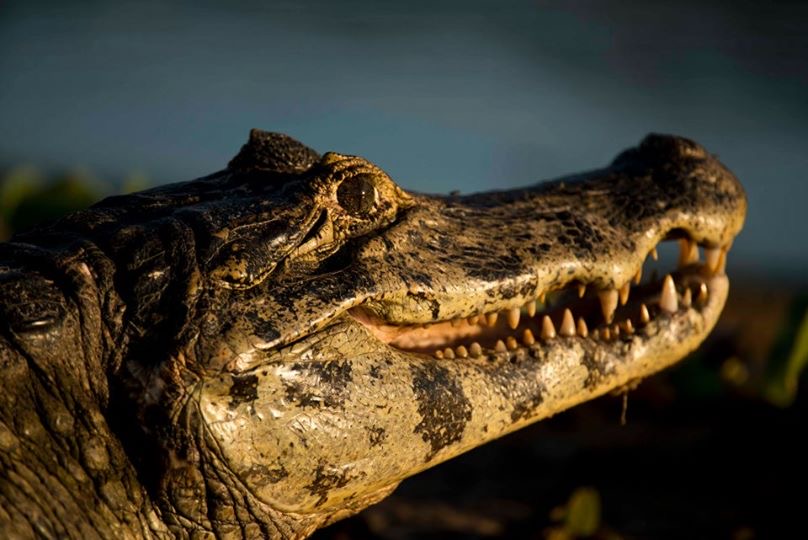
Black Caiman (Melanosuchus niger)
The black caiman is the largest predator in the Amazon basin, growing to six meters. It was heavily hunted in the mid-twentieth century and disappeared from much of its range, but has recovered strongly in the Rupununi, where it plays a critical role in regulating fish populations and cycling nutrients through the wetland system.
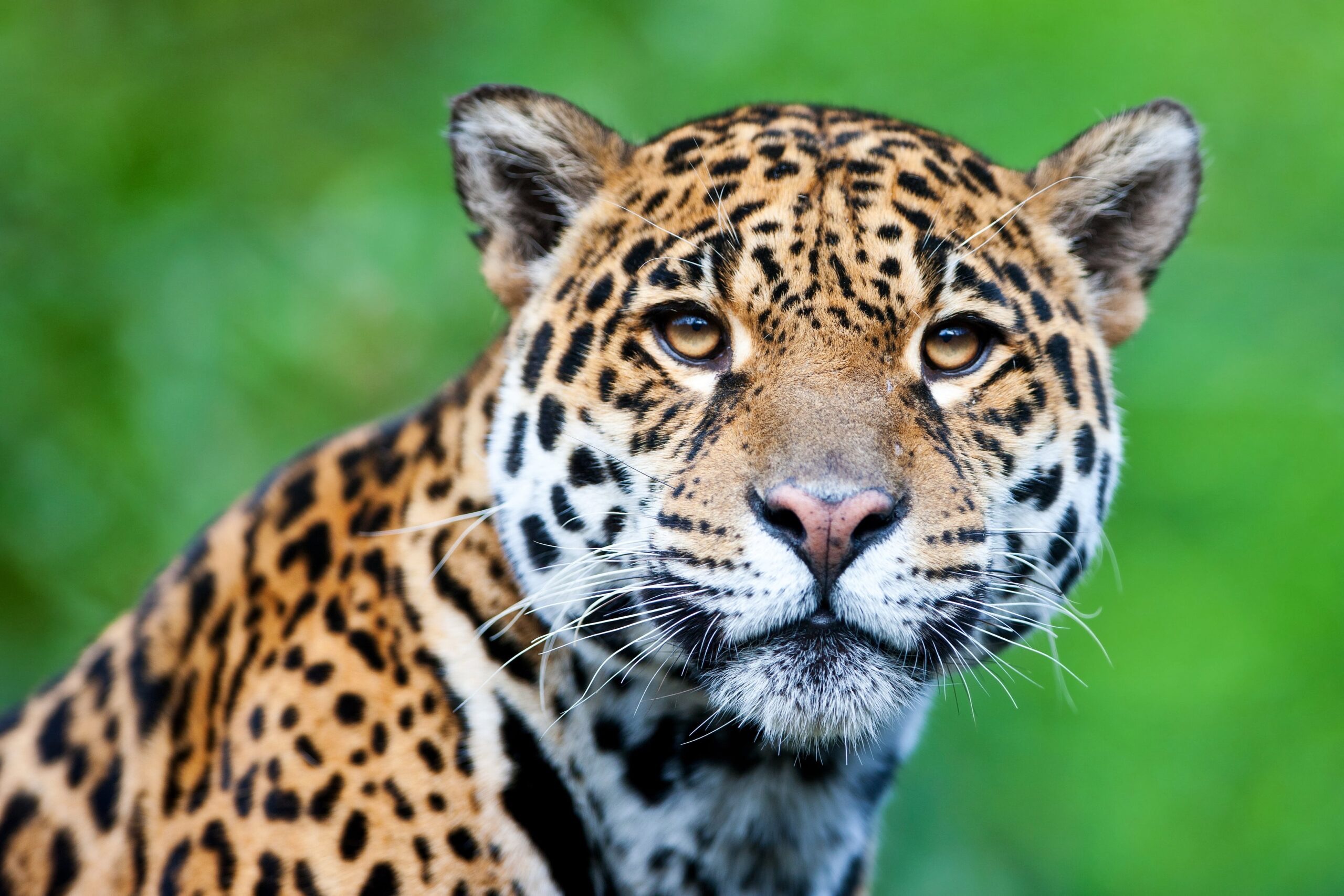
Jaguar (Panthera onca)
The jaguar is the top predator of the western hemisphere and a living indicator of the Rupununi’s ecological health. Camera trapping and community-based monitoring have confirmed high densities in the Kanuku Mountains and Iwokrama Forest. Its presence signals an intact ecosystem capable of supporting large predators — something increasingly rare in South America.
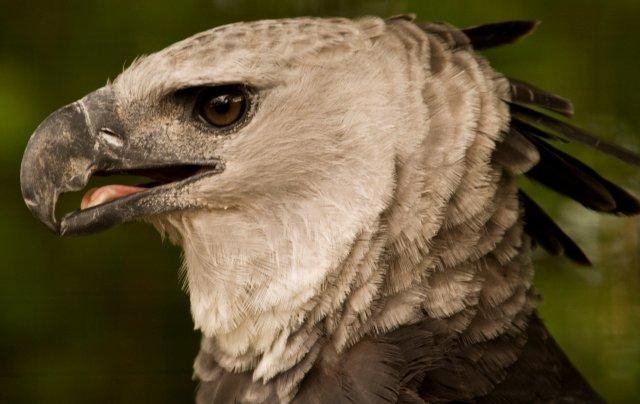
Harpy Eagle (Harpia harpyja)
The harpy eagle is the most powerful eagle in the Americas — its legs are as thick as a child’s wrist and its talons larger than a grizzly bear’s claws. It nests in the tallest trees in the forest and hunts sloths, monkeys, and large birds. The Rupununi’s intact forests provide some of the last strongholds for this magnificent and globally threatened bird.
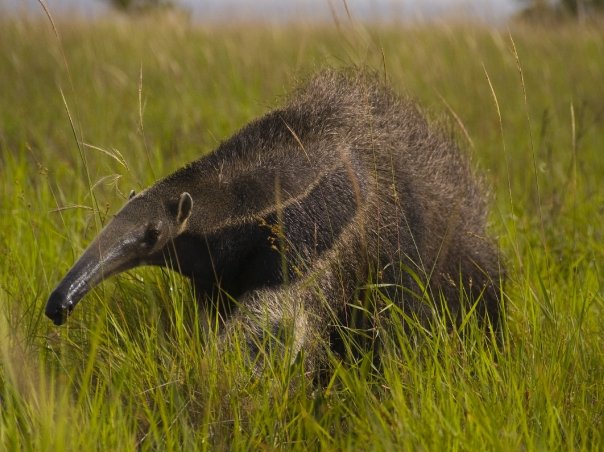
Giant Anteater (Myrmecophaga tridactyla)
The giant anteater is the largest of the anteater species, reaching up to two meters in length and weighing more than 40 kilograms. It is a solitary, ground‑dwelling mammal that feeds almost entirely on ants and termites, using powerful foreclaws to break open nests and a long, sticky tongue to extract prey. Listed as Vulnerable across much of its range, the giant anteater has disappeared from large parts of Central America but remains an emblematic species of the Rupununi savannah–forest mosaics in Guyana. In the South Rupununi, indigenous‑led conservation initiatives supported by the South Rupununi Conservation Society have established community safe zones and monitoring programs that are now recognized internationally as examples of effective, community‑managed wildlife conservation.
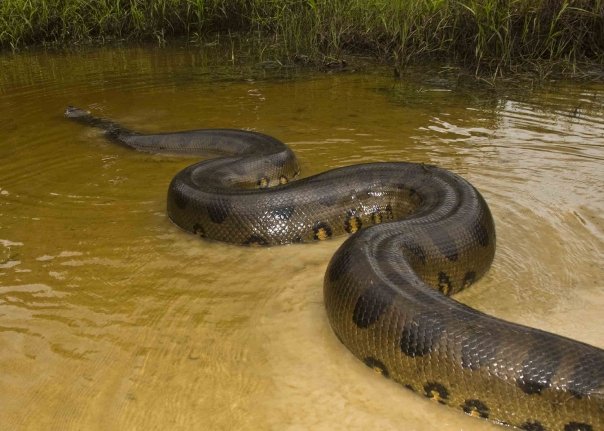
Green Anaconda (Eunectes murinus)
The green anaconda is the world’s heaviest snake, reaching lengths of over six meters and weighing more than 200 kilograms. A semi‑aquatic constrictor, it spends most of its life in slow‑moving rivers, flooded savannahs, and wetlands, where it ambushes prey at the water’s edge. Widely distributed across Amazonia and the Guiana Shield, green anacondas remain common in the Rupununi’s seasonally flooded plains and river systems, including the Rewa and Essequibo basins. Although classified globally as Least Concern, their persistence depends on intact wetlands and low human persecution, making the Rupununi one of the species’ strongest remaining landscapes where large predators and floodplain ecosystems still function together.
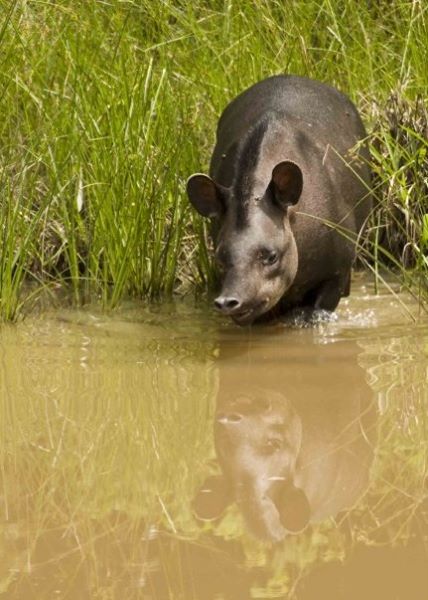
Tapir (Tapirus terrestris)
The Brazilian tapir is the largest land mammal in Guyana, weighing up to 300 kilograms and reaching over two meters in length. A powerful but shy herbivore, it moves quietly through forests, wetlands, and river margins, using its prehensile snout to forage on leaves, fruits, and aquatic plants. In the Rupununi, tapirs are found along forest edges, gallery forests, and river systems such as the Rupununi and Rewa, where they act as important seed dispersers linking savanna, forest, and wetland ecosystems. Globally classified as Vulnerable due to habitat loss and hunting pressure, the tapir persists in the Rupununi because of large, interconnected habitats and relatively low human density, making the region one of its most important remaining strongholds.
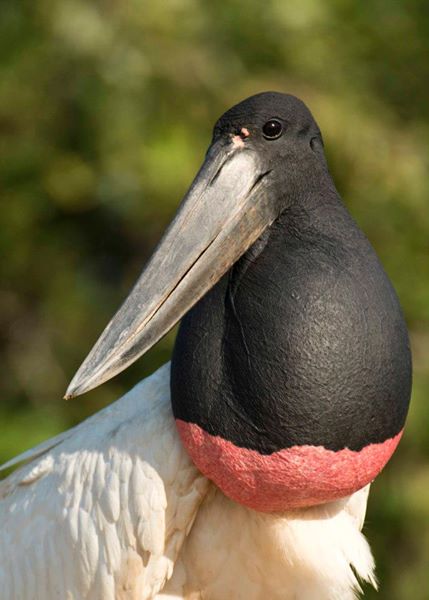
Jabiru Stork (Jabiru mycteria)
The jabiru stork is the tallest flying bird in the Americas, standing over a meter high with a wingspan approaching three meters. Instantly recognizable by its stark white body, black featherless head and neck, and vivid red throat band, the jabiru is an iconic giant of the Rupununi’s seasonally flooded savannas and wetlands. In the Rupununi, it is most commonly seen in the North Rupununi Wetlands, where it stalks shallow waters in search of fish, frogs, snakes, and other aquatic prey. Closely tied to the annual flood cycle, jabirus appear in greater numbers during the wet season, when expanding wetlands concentrate food and create ideal feeding grounds. Although the species is classified globally as Least Concern, the jabiru depends on large, intact wetland systems, making the Rupununi one of its most important strongholds in the Guiana Shield.
Conservation
The Rupununi’s wildlife is protected through a combination of formal protected areas and community governance. The Kanuku Mountains Protected Area and the Iwokrama Forest offer the formal foundation. Community-based management — of arapaima, giant river turtles, and hunting quotas — extends protection beyond formal reserves.
The Government of Guyana’s Low Carbon Development Strategy commits to doubling the country’s protected area system. It aims to achieve the global 30 by 30 target — conserving 30% of lands and oceans by 2030. In 2025, the Global Biodiversity Alliance was launched in Georgetown. The alliance uses the Rupununi as a model for biodiversity governance at the community scale.
Explore the Rupununi
The Rupununi’s extraordinary wildlife exists because of an equally extraordinary landscape. The ancient geology of the Guiana Shield created the habitats — tepui mountains, rift-valley savannas, and seasonal wetlands — that sustain over 1,400 vertebrate species. These ecosystems have been protected for millennia by the Makushi people, whose history stretches back over 10,000 years, as documented in the History of the Rupununi. Meet the authors and photographers who brought this world to life, read the Rupununi Blog, or return to the home page.