What Is a Jaguar Worth in the Rupununi?
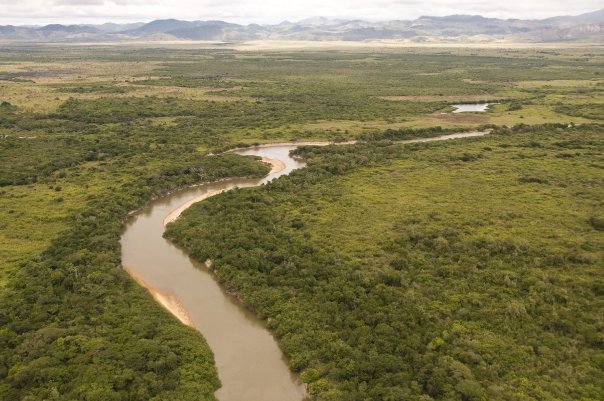
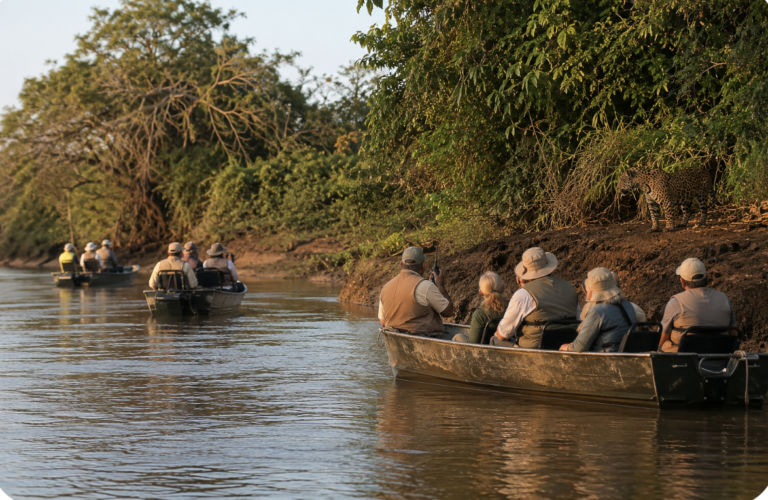
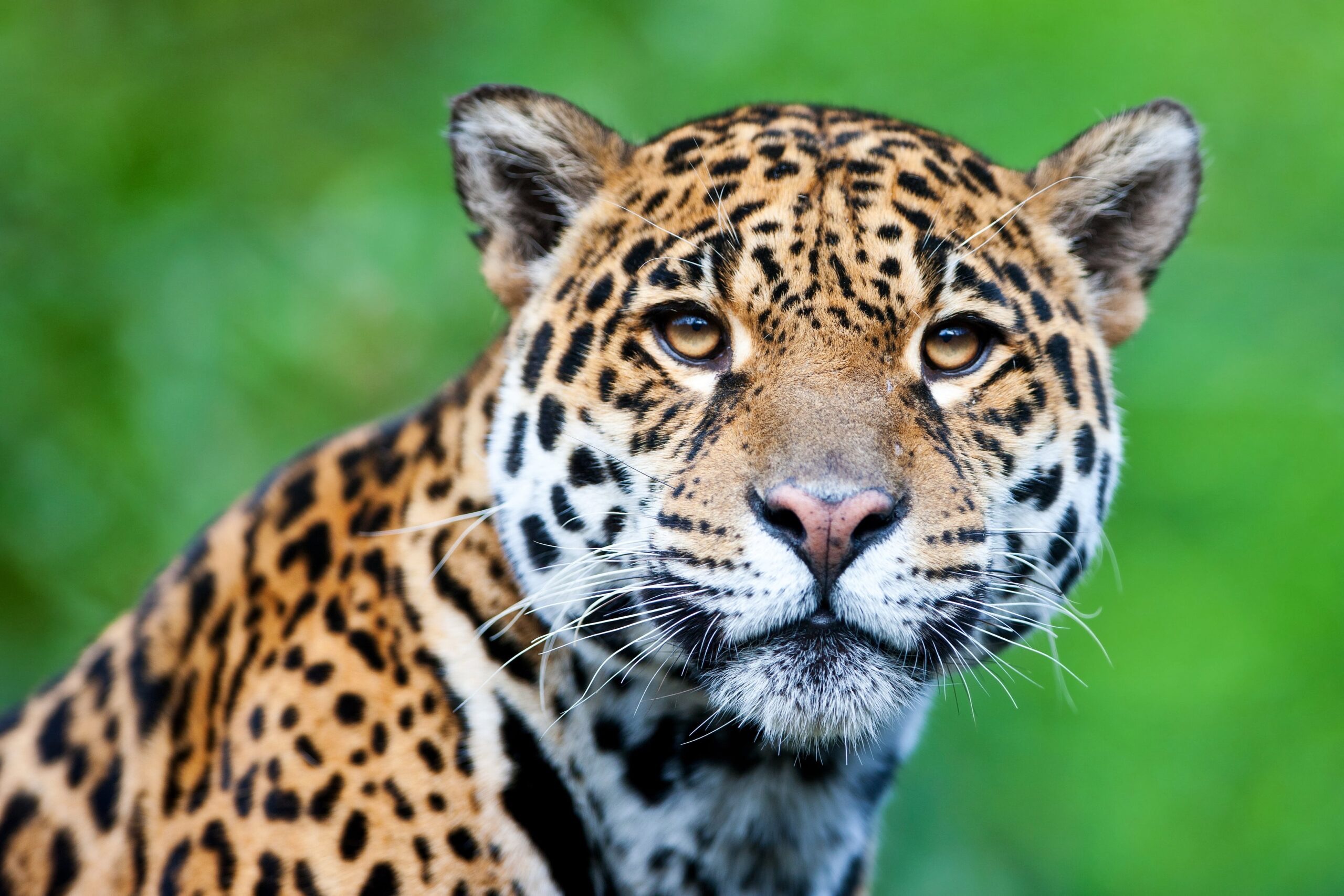
In Brazil’s Pantanal, a single jaguar has been valued at more than US$1,000,000 a year from tourism. That estimate comes from seven Porto Jofre lodges, which grossed US$6,827,392 from jaguar-watching in 2015. Four hundred miles north, however, Guyana’s North Rupununi holds the same cat at comparable or higher densities. The difference is sightings. For example, at low water from July to October, jaguars hunt capybaras and caiman on exposed banks. So the lodges there sell near-guaranteed views. Yet Rupununi jaguars stay hidden. They also live on Makushi- and Wapichan-titled land, while the Pantanal trade runs on private ranches.
Worth how much, and to whom.
What is that jaguar worth in the North Rupununi today? And how much of its value could reach Makushi and Wapichan communities? After all, a household there may earn only US$300 to US$600 a year. The Pantanal figure, though, marks an upper bound on what a cat could earn. Porto Jofre sells unusually reliable sightings. By contrast, the Rupununi has no recorded sighting-success rate, despite its high jaguar densities.
Following a visitor’s dollar.
A visitor’s dollar splits into several flows, and the question is where each one lands. For instance, an average seven-day Rupununi trip costs about US$2,900 today, while a Pantanal trip costs about US$4,650. Both totals include an international flight, an internal transfer, two gateway-city nights, and the in-region lodge and trips. Indeed, the distributions are close. In both, lodges within the region account for the largest share: 68% in the Pantanal and 61% in the Rupununi. Transport, meanwhile, takes 28% in the Pantanal and 30% in the Rupununi. Finally, gateway-city hotels account for 9% of the market in Georgetown, compared with 3% in Cuiabá.
More than jaguars.
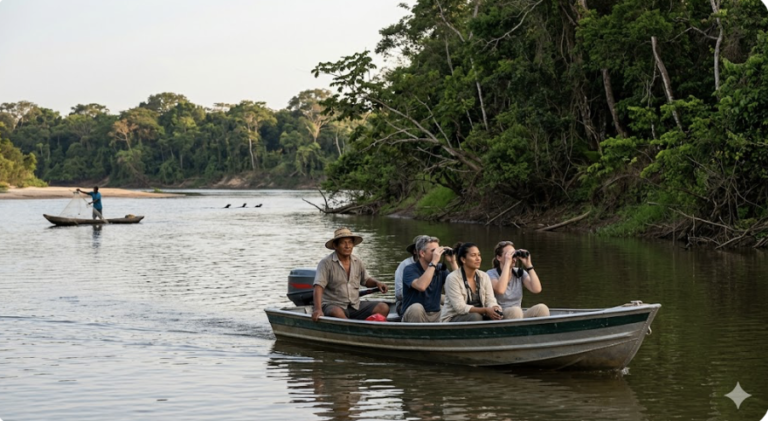
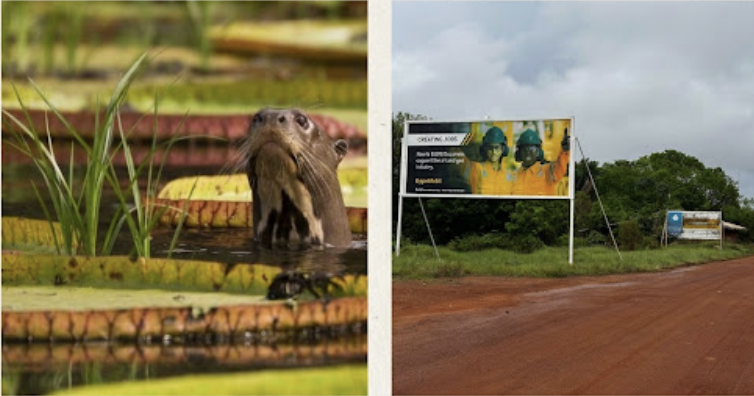
Visitors to the Rupununi do not come mainly for jaguars. They come for arapaima, black caiman, anaconda, tapir, giant otters, and giant anteaters. They also come for birds such as harpy eagles, Guiana Shield cotingas, and the rufous-winged ground-cuckoo. Pantanal visitors, by contrast, come for the jaguar and see the rest along the way. Jaguars are the icing on the cake, but they already move real money through the Rupununi, which is under-marketed. The Pantanal offers a near-guaranteed jaguar under a single shared brand. The Rupununi sells a possible jaguar as part of a wider bundle. Porto Jofre has a mature, photographer-branded market, daily access, and scarce peak-season beds, which command premium prices. The Rupununi is remote, low-volume, and unbranded. Almost the entire US$1,750 gap sits in the lodge price, captured by private ranches. The premium is real, but land ownership decides who keeps it.
The choices ahead.
This post takes these questions seriously. It follows the money through the value chain, to see how much reaches communities and where it leaks. It asks what the Rupununi should sell, how to market and price it, and how the new road changes access and cost. The answer is a set of choices about product, marketing, ownership, and access that decide whether the jaguar pays the people who live with it.
Tourism revenue leakages.
The first revenue leakage happens before the tourist even reaches the interior. For example, international flights account for about 17% of the Rupununi trip and 18% of the Pantanal trip. Moreover, it leaves the country entirely, paid to foreign airlines and booking agents. In the Rupununi, meanwhile, Georgetown hotels, domestic flights, and 4×4 transfers take roughly another 20%. That share, at least, stays in Guyana and feeds the national economy. But these dollars never enter the Rupununi, so they cannot reach the people who live with the wildlife.
When the village gets nothing.
The second leakage matters more, because weak local flows breed conflict. For instance, when tourism builds an enclave whose benefits skip the villages, resentment follows. A community earning nothing from a jaguar will not tolerate one that takes a calf or a dog. Instead, it has every reason to shoot it. Withheld, the revenue that should make the cat an asset instead makes it a target. The often-quoted US$5 of every US$100 that stays local describes mass tourism. That model, after all, runs on foreign-owned hotels, all-inclusive resorts, and imported goods. The Caribbean is the textbook case: it earns about US$32 billion a year, yet roughly 80% leaks away. In Barbados, similarly, foreign operators built the hotels that channel the receipts off the island.
Ownership, not employment.
The third point is about ownership, not employment. The gap is large. For example, a community-owned lodge keeps most of its revenue and employs a local team. An outside-owned lodge, by contrast, returns only the wage bill and a fee. Surama and Rewa, for instance, are community-owned, and Surama keeps over 90% of its revenue. In Ecuador, similarly, Sacha Lodge employs about 90% of its staff locally yet stays privately owned, so the profit leaves. Kapawi ran the same way until 2008, when ownership passed entirely to the Achuar. Iwokrama, meanwhile, sits in between, returning wages and a US$ 15-per-visitor fee. Tourism and hospitality employ more than half of the Rupununi’s people, but wages are not proportional to their share of assets.
Does the arapaima model offer guidance?
The North Rupununi is already building one working wild-species instrument, the Arapaima Management Plan. Indeed, the model proves that local communities can monitor, govern, and earn from wildlife. For example, the North Rupununi District Development Board (NRDDB) organized fishers to count surfacing arapaima using traditional ecological knowledge. In 2001, moreover, Brazil’s Mamirauá Reserve trained Guyanese fishers in dry-season counting, and they told individual fish apart. Meanwhile, social sanctions such as talk-name pressure and ostracism held the harvest ban without state policing. The results were positive. In the management area, counts rose from 425 in March 2001 to 1,200 by December 2003. By 2011, they had passed 3,300, while the basin-wide count climbed from 822 in 2001 to over 5,800. Then it reversed, falling to 4,591 by 2013 as illegal fishing returned to the easier-access lakes.
From fish to a premium product.
Arapaima sport fishing now fills part of the gap. The business generates an estimated US$700,000 to US$1.4 million a year. For example, at about US$5,300 a head, some 150 to 300 anglers come a year. That is a small, high-value flow, not a crowd. Moreover, the trip costs more than the Pantanal trip. It is built around one scarce, branded product: catching arapaima on a fly rod. So the target market pays well, the sighting is near-guaranteed, and the opportunity remains low-volume and exclusive.
Elusiveness, though, is not destiny. Pantanal jaguars, for instance, concentrate on riverbanks at low water, which is what makes them sellable. Similarly, Rupununi giant anteaters can be found on the open savanna at dawn and dusk. Patagonia’s puma-tracking lodges also turn a solitary cat into a sure product by locating it and then guiding visitors in. The arapaima lesson, therefore, is simpler: value follows focus. In short, the Rupununi should pick unique, scarce, brandable products and build a market around each one.
What the world pays for one species.
Single-species wildlife tourism is a global market. Its premium products, moreover, all out-price a Pantanal jaguar trip. For example, a seven-day trip from New York built around Costa Rica’s resplendent quetzal runs about US$5,500. A Ladakh snow-leopard expedition, similarly, runs about US$6,500. A Rwanda mountain-gorilla trek also runs about US$6,500, and the permit alone costs US$1,500. Each offering sells one scarce, branded, near-guaranteed animal to a market that pays. On that ladder, therefore, the Pantanal jaguar trip (US$4,650) and the Rewa arapaima trip (US$5,300) sit mid-range. By contrast, the generic Rupununi trip (US$2,900) is underpriced. The Rupununi holds the same class of assets on community-titled land. They include the harpy eagle, cock-of-the-rock, giant anteater, jaguar, arapaima, and sun parakeet. In short, it has the resources; it needs to focus and develop them, not discover them.
The road is the alarm bell.
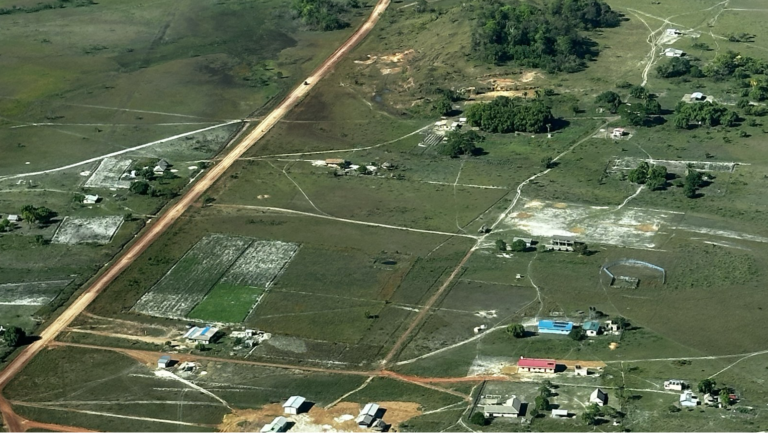
Most visitors on these high-value tours fly into the Rupununi by small plane, to Annai, Fairview, or Lethem. The Linden-Lethem Road upgrade changes the calculus. Paving turns a long, rough haul into a comfortable drive of a few hours. Cheaper, easier access matters because internal travel is costly in a remote region. Money saved on transfers can go into the product, the marketing, and the hospitality the region needs to compete.
The wrong kind of tourist.
The road is a clock because it does not only carry the visitors the region wants. A paved highway can also bring mass tourism, the opposite of the high-value, low-volume model that keeps money local. The Caribbean Development Bank (CDB) projected 62,494 extra tourists a year, US$37 million in gross domestic product (GDP), and 3,280 jobs. But raw tourist numbers are the wrong target. What matters is the number of high-end visitors, not the size of the crowd.
The wildlife risk.
Access cuts both ways for the wildlife. More traffic disturbs animals along the highway. In 2024, Iwokrama patrols recorded zero jaguars or felids over 72 km of the main road. Easier entry can also bring unregulated mining and hunting that thin out the species visitors pay to see. Research already links gold mining to 91% of titled-land deforestation by 2014, before this upgrade. Holding the value means managing the secondary roads and keeping the interior as isolated as possible.
Rough roads as a by-product?
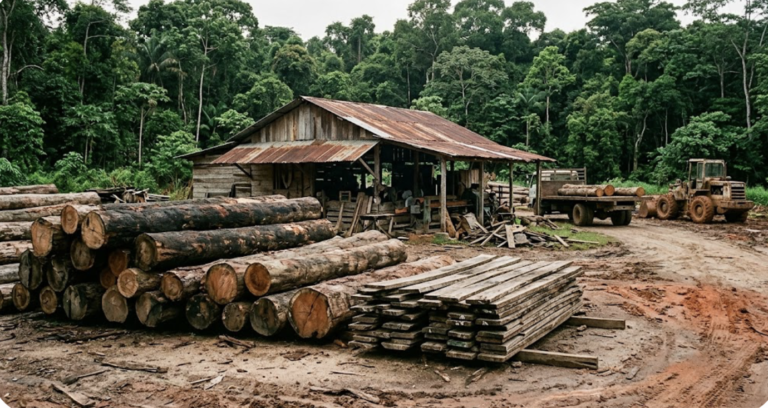
The logging roads point the other way. Jaguar detection can rise in selectively logged forest, where tracks and gaps concentrate prey. That suggests a design for a new product. Bring visitors in on the paved road, then onto rough tracks by bicycle or light vehicle, where sightings are most likely. The paved road becomes the access, and the rough roads become the product.
A way forward?
The Rupununi already has the pieces. It has the cats, trained community monitors, community-owned lodges, and the arapaima precedent. The Low Carbon Development Strategy (LCDS) carbon model is a working payment pipe. It has moved about US$69 million to more than 200 titled villages. What it cannot do is grow by building many more lodges. The value lies in a small, high-paying flow. The region scales by raising what each visitor pays, not by filling the forest with beds. Carbon funds can help build the tourism product.
No shortcut through carbon.
The jaguar has no single-species credit method in Guyana. No such transaction has closed anywhere in the country. The closest was the Jacksonville Zoo deal, which paid revenue to the government for cats held at the zoo. The work in tourism is ordinary and hard: develop the product, market it to the right buyers, and deliver it well. Rewa turned arapaima into a premium trip, and the Rupununi could do the same with jaguar sightings.
Community ownership, business skill.
The best model is community ownership backed by knowledgeable business partners. Kapawi in Ecuador shows the path. An operator built and ran it, then handed full ownership to the Achuar. On titled land, communities can hold the rent and any future credit. On state and co-managed land, that value vests in the state or an NGO. Where title is weak, the instrument must put ownership, not just wages, in community hands.
In practice.
So, the path is concrete. Improve access and cut internal transport costs, then spend the savings on a sharper product, targeted marketing, and better hospitality. Build on what already works and ensure the benefits reach the communities that hold the land. Do that, and the question this piece opened with has an answer. What is a jaguar worth in the North Rupununi? Potentially a great deal.
Explore the Rupununi
Dive deeper into the Rupununi’s natural and human world. Explore the region’s ancient geology and the Guiana Shield, the remarkable wildlife of the Rupununi, the rich history of human settlement, and the living culture of the Rupununi people. Learn more about the authors behind this companion site, and follow the latest thinking on conservation and development in the Rupununi Blog.
Follow the Rupununi on Facebook for new stories, wildlife news, and updates from the book: facebook.com/rupununi.org
Discover more from Rupununi: Rediscovering a Lost World
Subscribe to get the latest posts sent to your email.