
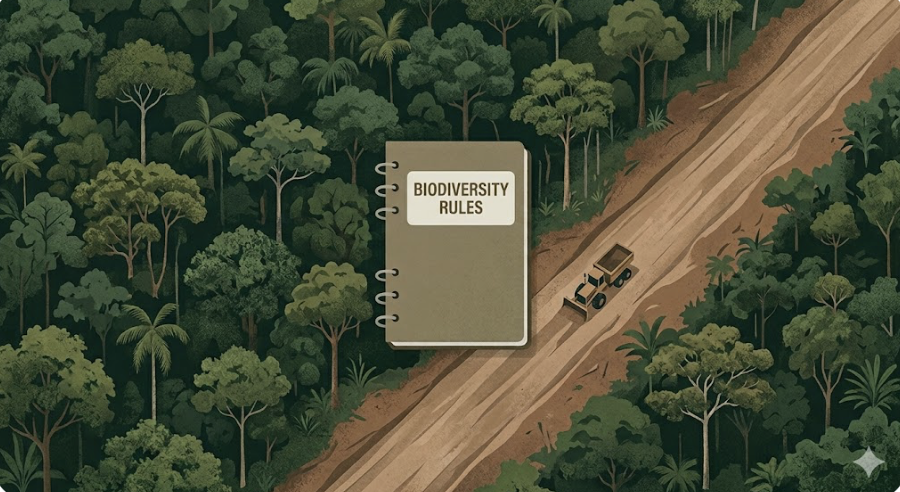
Guyana’s biodiversity revenue depends on state leadership
Why biodiversity revenue is pressing now
Guyana is being pulled in three directions at once. Global buyers want nature outcomes. Investors want bankable instruments. Citizens want jobs, services, and roads now.
That mix makes biodiversity revenue attractive. It also makes overpromising easy. In Guyana and across LAC, governments and firms are moving fast. In many cases, legal definitions still lag. Rights and liabilities can remain unclear. Regulators often lack staff and tools. MRV systems are uneven. Ministries can pull in different directions. Weak public financial management can turn a sound idea into a scandal.
This note sets out the main biodiversity revenue mechanisms. It stays focused on what must work first: rules, measurement, and credibility.
Biodiversity measurement is the bottleneck.
Biodiversity does not fit into one unit the way carbon does. You are dealing with species, habitats, and ecological functions. They do not move together. They also change across space and time. Most systems rely on bundles of indicators. Habitat condition classes are common. Composite scores are common, too. The downside is straightforward. A single headline number can hide major ecological loss. Area measures are especially risky. Two lakes can look identical on a map and function nothing alike.
Baselines do the heavy lifting in biodiversity finance. They anchor “additionality” and outcome claims. But baselines are hard to build in tropical systems. Data is patchy. Ecosystems shift with seasons and climate cycles, including ENSO. Conditions also vary sharply over short distances. One hectare is not the next. Guidance often says, “Use good practice,” and then stops. That is not evasive. It reflects a real limit. In Guyana, as elsewhere, data are stronger for birds and mammals. It is often thinner for insects and fungi.
Maps matter more than people admit. Ministries need spatial tools to set priorities. They also need them to screen new infrastructure. Habitat and natural capital layers can help. They will not replace field work. They can reduce guesswork and speed decisions.
Finance runs on reporting. Biodiversity reporting still struggles to meet that demand. Many frameworks track impacts, dependencies, and risk. Fewer measure ecological outcomes in ways that support payment decisions. Results-based designs can help by forcing clarity about what gets paid. They also raise the stakes on uncertainty. Carbon markets show the problem. When verification gets messy, credibility collapses.
The risk climbs when finance depends on vague “co-benefits.” The IFC biodiversity finance metrics framework (2024) lists impact metrics. It does not set verification thresholds. MDBs are moving toward shared principles and indicators. The Belém Alignment points to ecosystem extent, integrity, quality, function, and pressure reduction. It also covers ecosystem services, governance, and rights outcomes. Useful, but still not a carbon-style MRV system.
So what should a policymaker take from this? Biodiversity revenue needs baselines, spatial tools, and reporting that holds up. Standardization is weaker than in carbon. Long-run outcome datasets are scarce and expensive. Remote sensing can close some gaps over time. Field data will still settle many questions.
What biodiversity revenue can look like
Some biodiversity revenue is old-fashioned. That is a strength. Entrance fees work when a site draws visitors, and the state enforces payment. Galapagos National Park raises roughly US$20 million a year. Bhutan’s tourism levy is US$100–200 per visitor per night. It yields around US$50 million a year. Concessions can do more than raise cash. Under tight rules, they can improve service delivery. SANParks lodges in Kruger generate about US$70 million a year. Licenses can be steady earners, too. In the United States, hunting and fishing licenses raise roughly US$1–1.5 billion annually. Marine fees also add up. Belize and several Caribbean states use cruise and marine park fees.
Biodiversity credits and habitat banks aim for a different channel: payment for measured outcomes. Some buyers act voluntarily. Others appear because the law requires compensation. Credits package conservation or restoration into tradable units. Habitat banks can register supply and match it to demand. They often sit behind offset systems. In Guyana, the EPA can accelerate this by setting and enforcing offset requirements for large infrastructure. That creates compliance demand with real money behind it. It also creates a pipeline of capital for conservation concessions and similar actions. These systems still need tight governance and credible measurement. Many countries are early in the learning curve. Colombia set up a habitat bank in 2017. It sells credits under national offset rules.
Some countries channel biodiversity finance through carbon markets. Carbon is the priced unit. Biodiversity then appears as a side benefit. Carbon MRV is more mature than biodiversity MRV. It does not measure biodiversity outcomes well. That gap matters. Treating carbon as a proxy for biodiversity can misstate results. It can also create reputational risk for the government and buyers. The ecological value of a tropical forest is not the value of a temperate forest. Guyana’s ART-TREES credits show how the linkage works. The system also shows the extra work needed on biodiversity outcomes.
Results-based payments tie money to verified delivery. The delivery can be ecosystem services. It can also be forest maintenance or restoration. Results-based payment only works with credible baselines and institutions that can monitor and report. Chile and Uruguay link performance to sustainability-linked bonds. That approach is relevant for Guyana. Debt-for-nature conversions like Ecuador and Barbados used may be harder to access at scale. Oil revenues have changed how markets read fiscal need and eligibility. That is why those cases are not covered here. Sustainability-linked sovereign instruments may fit better. They link borrowing costs to the verified nature and climate performance. Costa Rica’s payments-for-ecosystem-services system began in 1997. It supports landholders who maintain or expand forests. Costa Rica funds the system through a fossil fuel tax transferred through FONAFIFO. It also finances protected area management through entrance fees and general funds. These include airport departure taxes and tourism fees.
Blended finance tries to bring private capital into biodiversity-linked investments. Public or concessional money takes part of the risk. That can lower the cost of capital. It can also extend tenors. The trade-off is complexity. Investors want predictable rules and reporting. Governments want flexibility and control. When governance is weak, deals unravel. Blue bonds show the tension. Ecuador issued a blue bond in 2023. It supports water management, marine biodiversity, and sustainable fisheries. The instrument works best with ring-fenced use-of-proceeds and enforcement capacity. It also needs long-term institutional commitment.
Trust funds play a different role. They hold money over time and pay out in accordance with agreed-upon rules. They can pool inflows, invest them, and spend returns on conservation. Many funds start with a large transaction. Debt-for-nature conversions are one entry point. Multilateral or philanthropic donations are another. Governance is where these funds live or die. Fiduciary controls matter. So does continuity across political cycles. LAC has several examples. These include newer funds in Galapagos, Barbados, and Belize. They also include older vehicles, such as Mexico’s Fund for Nature Conservation, established in 1994.
Governance sets the ceiling.
Biodiversity revenue does not run on autopilot. The government must set direction and police the rules. Markets will not fix conflicting objectives across ministries. Regulators must enforce, or credibility evaporates. Start with national priorities. Then define assets, rights, and liabilities. Only then do instruments make sense. The state can also create demand. Mandates and standards do that job.
Early-stage risk sits with the state. Ministries pay for learning, MRV, and enforcement. It is not glamorous work. It is the work that keeps deals standing. Fragmented mandates recur across LAC. They create gaps and contradictions. Indigenous peoples are rightsholders in many settings, not “stakeholders. In much of LAC, biodiversity sits on Indigenous lands. Governments need engagement early, not after contracts are signed.
Chile has pushed mainstreaming through dialogue and legislation. Guyana has its own track record. It updated the Low Carbon Development Strategy in 2022. For a detailed analysis of how Guyana’s oil revenues interact with conservation governance, see Guyana’s Oil Boom 2015 to Today at Watkins Advisory. It also supports Indigenous co-management in Konashen and the Kanuku Mountains Protected Areas. Guyana’s carbon governance offers a reference point. The state treats carbon credits as state property. It anchors them in LCDS 2030. It issues them under ART-TREES. It runs MRV with independent verification. It also signs sovereign-buyer agreements. A rules-based allocation commits 15 percent of proceeds to Indigenous peoples.
Biodiversity revenue will need the same design discipline. It will also need political legitimacy. Rights come first. Biodiversity assets often overlap with Indigenous and community lands. If the government leaves rights unclear, conflict follows. Benefit sharing also needs rules that people can understand. Ambiguity can trigger disputes now and reputational damage later. There are experiences throughout LAC. Colombia set legislative rules for habitat banks. Costa Rica did the same for payments for ecosystem services.
Capacity is a choke point. Monitoring and enforcement cost money every year. Governments usually carry those costs because they are public goods. Without them, biodiversity revenue does not scale. Trust fund management is another common gap. In some cases, international public finance can help establish and run the funds.
These instruments also shift risk between governments and investors. Debt-for-nature conversions in the Amazon and Galapagos created trust funds in Ecuador. Those funds are governed independently, with state representation. The government still manages political and social risk. Community participation needs strong management. Long-term governance helps maintain investor confidence.
Biodiversity revenue is still experimental in many areas. Direct-use revenues are the exception. Tourism fees, licenses, and concessions are already in place in many places. Governments should expect iteration. They should plan for transparency, learning, and course correction.
Likely gains and real risks
- Biodiversity revenues can add fiscal resources and steady conservation finance.
- They can support local development when benefit sharing is trusted.
- Governance design shapes distribution more than headline revenue.
- Weak rules can trigger backlash, reversal, and credibility loss.
- Ecological outcomes often arrive later than financial flows.
Policy stance: build the state first
Treat biodiversity revenue as state-building, not product design. Put rules and enforcement on the same footing as finance. Build MRV systems you can defend in public. Say what is uncertain and why. Lock in rights and benefit sharing early. Then choose instruments that fit the administrative reality. Offset requirements and procurement standards can create demand. A national biodiversity balance sheet and registry could anchor claims and reduce disputes. For Guyana’s state capacity record that underpins these choices, see Guyana Reforms 1991–1996: Growth Outpaced State Capacity at The Next Wave.
Explore the Rupununi
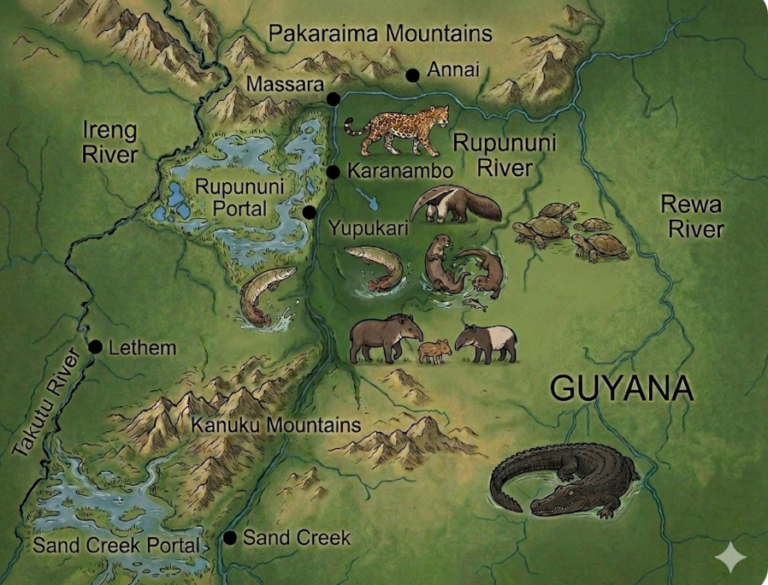
Dive deeper into the Rupununi’s natural and human world. Explore the region’s ancient geology and Guiana Shield, the remarkable wildlife of the Rupununi, the rich history of human settlement, and the living culture of the people of the Rupununi. Learn more about the authors behind this companion site, and follow the latest thinking on conservation and development in the Rupununi Blog.
Follow the Rupununi on Facebook for new stories, wildlife news, and updates from the book: facebook.com/rupununi.org
Discover more from Rupununi: Rediscovering a Lost World
Subscribe to get the latest posts sent to your email.
One Comment