Why the Kanuku Mountains are Protected.
Why the Kanuku Mountains Matter.
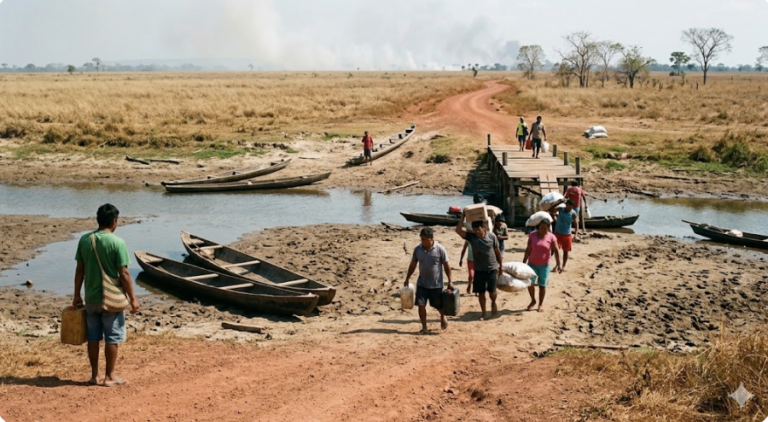
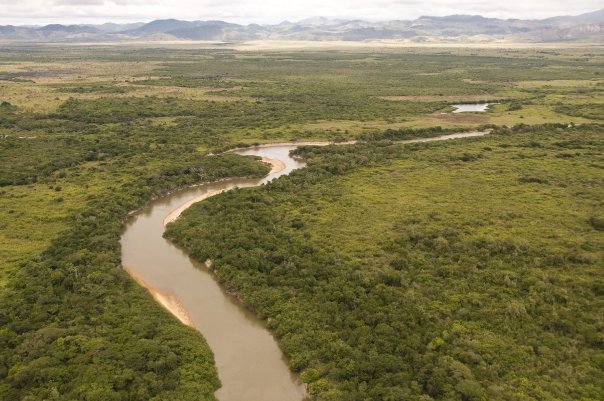
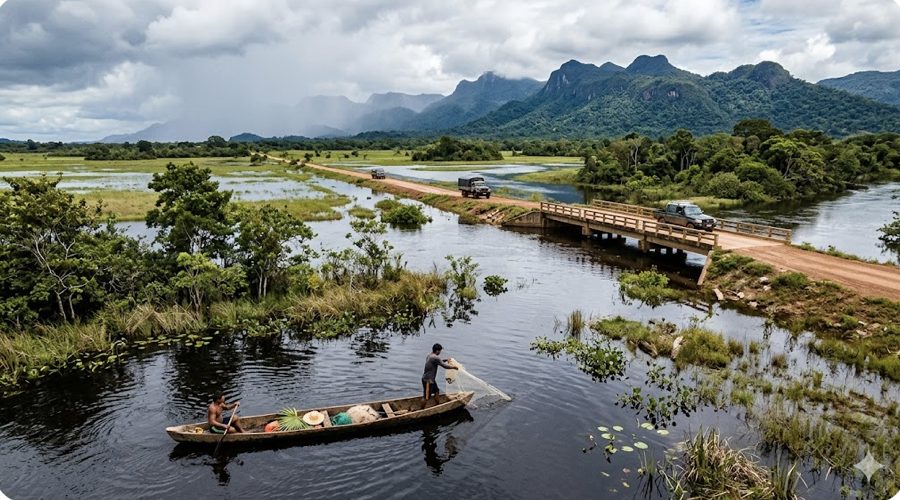
The Kanuku Mountains rise above flooded savannas and slow rivers in southern Guyana. During the wet season, floodwaters spread across the Rupununi and link distant river basins. Fish move with these floods, wildlife follows, and communities depend on the cycle. As in the North Rupununi and Iwokrama, this system faces growing pressure from forces beyond local control.
A simple balance shapes this connected ecosystem. If extraction grows faster than natural recovery, stocks decline over time. If local rules weaken while outside demand rises, pressure builds quickly. This gap between demand and renewal makes long-term stability hard to sustain.
The central issue is not conservation. It is control over how resources are used. Sustainable outcomes depend on indigenous-led co-management that links local rules with local knowledge. The argument develops through three steps: system structure, rising threats, and practical responses.
The Kanuku Mountains as a Living System.
Ecology and hydrology.
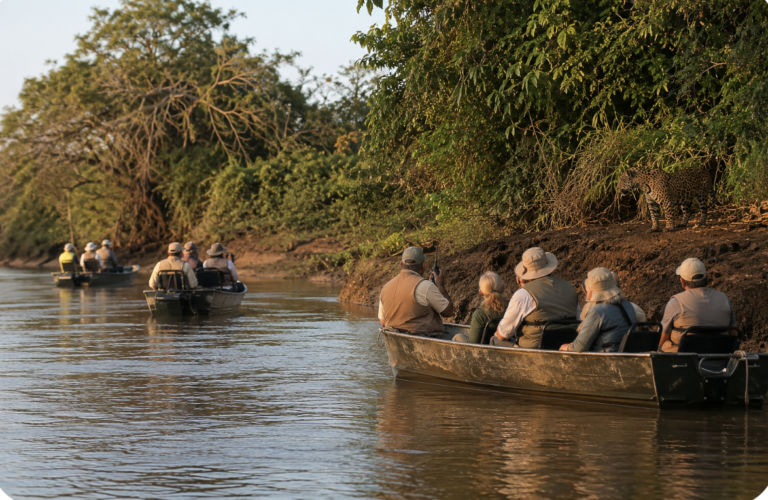
The Kanuku Mountains Protected Area anchors one of Guyana’s richest ecological systems. It holds a large share of the country’s mammals and birds within one connected habitat. One source estimates that the area contains 70% of Guyana’s mammals and 53% of its birds. Rivers, wetlands, and forests also function as a single system across the landscape. The Rupununi Wetlands form a seasonal water bridge between the Amazon and Essequibo basins. Because of that link, fish spawning and nutrient flows depend on seasonal flooding.
Communities and customary rules.
Indigenous communities are part of this system, not separate from it. Makushi and Wapishana households depend on fishing, hunting, and forest resources. Twenty-one Makushi and Wapishana communities rely heavily on these ecosystems for protein, building materials, medicine, and cultural continuity. Customary rules once kept most extraction within subsistence limits. Those rules helped keep pressure on wildlife and forests within ecological bounds. Local knowledge also shaped when people hunted, fished, and gathered resources.
Traditional practices also helped the system absorb pressure. Communities tracked animal movements, seasonal cycles, and habitat conditions. These observations shaped decisions on when to hunt, fish, or stop. Today, monitoring programs extend that knowledge into formal planning. Local data collection helps connect traditional knowledge with scientific methods. That link strengthens decisions about how the landscape is managed. Indigenous management practices sustain biodiversity by aligning use with ecological cycles.
Pressures on the Kanuku Mountains are growing.
Mining, roads, and outside demand.
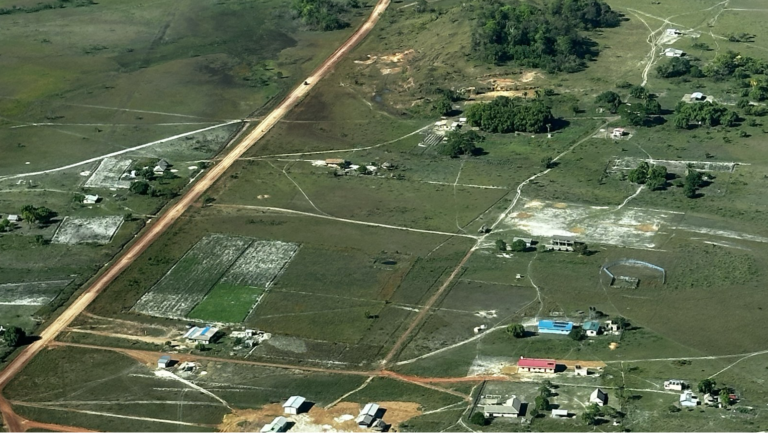
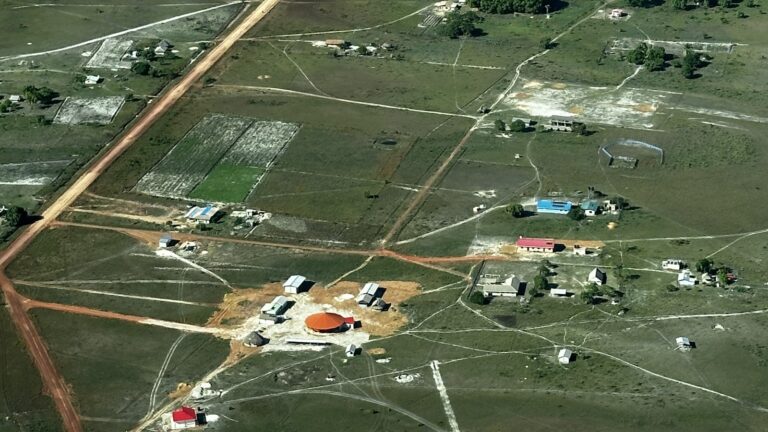
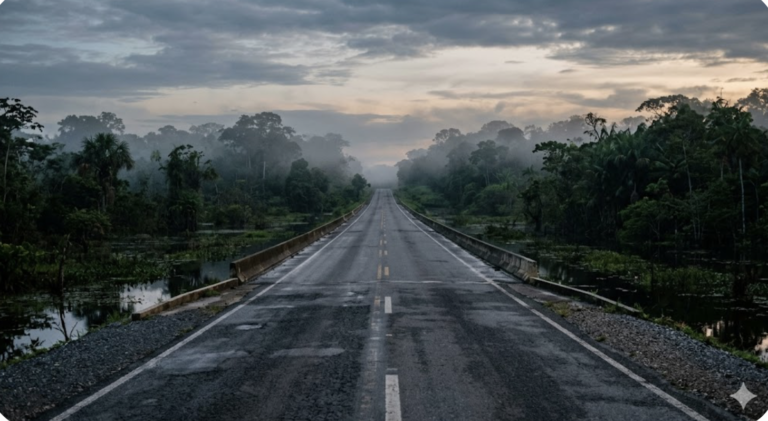
External commercial pressures now push extraction beyond older limits. High gold prices are driving rapid growth in small-scale mining across the Kanukus and the South Rupununi. Artisanal and small-scale gold mining is a major source of deforestation and mercury pollution. Mining clears forests, disturbs riverbanks, and releases mercury into waterways. Large-scale agriculture and transport projects add more pressure. The Georgetown-Lethem Road and the Takutu bridge increase access to forests and wetlands. Even though the road and bridge are crucial to national and local development, the same access also increases the risk of fragmentation and illegal wildlife trade.
Infrastructure also changes how the ecosystem is connected. Road corridors fragment habitats and allow illegal activity to move deeper into the region. Roads can also affect water flows, sometimes acting as barriers to water movements. Greater access increases hunting, logging, and wildlife trade beyond local control. Transport links reduce isolation but also expose communities to stronger external markets. As a result, pressure to extract resources for income grows. Habitat connectivity weakens as human activity spreads.
Shifts inside local communities.
Internal social and economic shifts add to these outside pressures. Many communities now depend more on cash income than on subsistence production. Market links encourage commercial hunting and the sale of natural products. Youth migration also weakens the transfer of traditional knowledge across generations. As older norms lose force, economic incentives shape behavior more strongly—the balance shifts from collective stewardship toward individual income generation. External market forces and internal economic shifts jointly erode ecological and cultural resilience.
Why co-management offers a way forward for the Kanuku Mountains.
Land rights and local authority.
Effective conservation depends on clear authority over land and resource use. Unresolved land tenure leaves indigenous territories exposed to outside encroachment. Titling Makushi and Wapishana lands can reduce vulnerability to mining and commercial expansion. Without formal recognition, communities cannot exclude mining or control access. Legal title strengthens the local authority to apply and enforce customary rules. Therefore, secure tenure supports long-term stewardship over short-term gain.
Shared evidence and local monitoring.
Co-management also depends on shared evidence. Participatory research allows communities to collect ecological data directly. Camera traps, mapping, and field surveys extend local observation systems. Scientific methods add consistency across sites. Together, these approaches build a common basis for decisions. That shared evidence improves early warning and adaptive management. Co-management goes well beyond joint data gathering and includes joint decision-making over resource use – critical to the management of both Iwokrama and the Kanuku Mountains.
Enforcement across stronger actors.
Rules must also hold against stronger outside actors. Weak coordination among agencies allows mining and other activities to sometimes bypass regulation. Clear enforcement is needed across environmental and mining authorities. Local monitoring networks can detect violations quickly. National agencies must then act with clear mandates and penalties. Without coordinated enforcement, ecosystems remain exposed to powerful commercial interests. Co-management works when land rights, knowledge systems, and enforcement capacity operate together.
What must happen next for the Kanuku Mountains.
The priority is to keep resource use within the locally set ecological limits. That requires aligned authority, knowledge, and enforcement across the landscape. When those elements work together, biodiversity and livelihoods can support each other. The result is a system that can absorb outside pressure without breaking down.
That system holds only when three conditions are met. First, indigenous stewardship helps maintain ecological balance through local rules. Second, unchecked pressure from markets and infrastructure can destabilize that balance. Third, co-management restores control by combining rights, knowledge, and enforcement. These conditions define the practical policy task. The flooded savannas and the rivers that connect them in the Rupununi and across the Kanuku and Iwokrama Mountains can sustain life only if the wider system remains intact. When control shifts away from local stewardship, degradation spreads quickly. When control remains anchored locally, renewal remains possible. That is why governance matters as much as ecology. For the broader regional economic context of these pressures, see Guyana’s Oil Boom 2015 to Today: Fast Growth, Hard Choices at Watkins Advisory, and Guyana 1962–1975: State Control and Commodity Exposure at The Next Wave.
Explore the Rupununi
Dive deeper into the Rupununi’s natural and human world. Explore the region’s ancient geology and Guiana Shield, the remarkable wildlife of the Rupununi, the rich history of human settlement, and the living culture of the people of the Rupununi. Learn more about the authors behind this companion site, and follow the latest thinking on conservation and development in the Rupununi Blog.
Follow the Rupununi on Facebook for new stories, wildlife news, and updates from the book: facebook.com/rupununi.org
Discover more from Rupununi: Rediscovering a Lost World
Subscribe to get the latest posts sent to your email.