Iwokrama 30 Years On: Forests Can Pay and Stay Conserved.
Why the Iwokrama forest matters now.
In Guyana, forests create jobs, knowledge, and income. It remains largely undisturbed. The Iwokrama Forest was created by law in 1996 for research, conservation, and economic use. Its work affects livelihoods, tourism income, and environmental stability. These benefits matter to people across the country. Yet the forest faces a hard task. It must balance use and conservation in a changing global economy.
Pressure comes from one basic problem. Iwokrama must earn income from natural resources without losing biodiversity or weakening vital ecosystem services. Today, the forest supports tourism, research, and sustainable timber use. The model could expand these benefits while preserving the wider landscape. The challenge is practical. Managers must support multiple uses simultaneously without harming the ecosystems that enable those uses.
Guyana is scaling this model across the whole forest estate. The aim is to link conservation with economic use. Science, business, and community management are working together to create value while forests stay intact. This blog looks at three questions. What is in Iwokrama, and why does it matter? Why have partnerships been so important to date? What lessons does the model offer for national development?
What Iwokrama and the Rupununi contain.
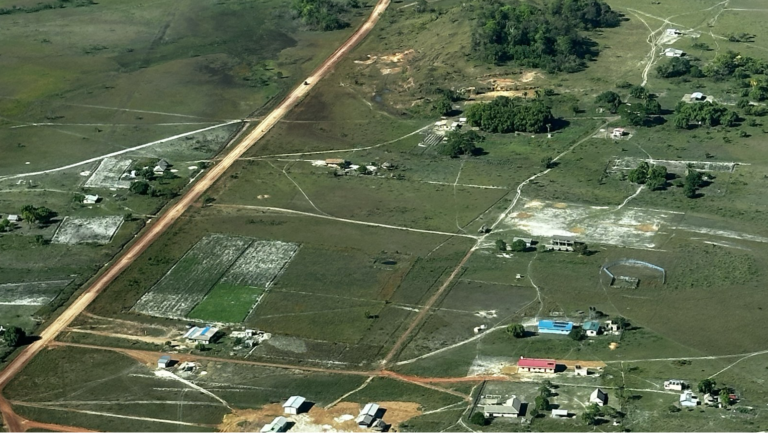
The Iwokrama Forest is found within one of the largest remaining intact tropical forests in the world. The Iwokrama Forest covers about 360,000 hectares and lies within the Guiana Shield, a region known for its high biodiversity. The forest connects with rivers, seasonal wetlands, and savannas, forming a complex landscape that links to the broader Amazon. This physical scale and connectivity allow ecosystems to function without major interruption. Seasonal flooding connects forest rivers to the Rupununi wetlands, supporting fish and wildlife across large areas. These visible ecological linkages sustain both biodiversity and local livelihoods.
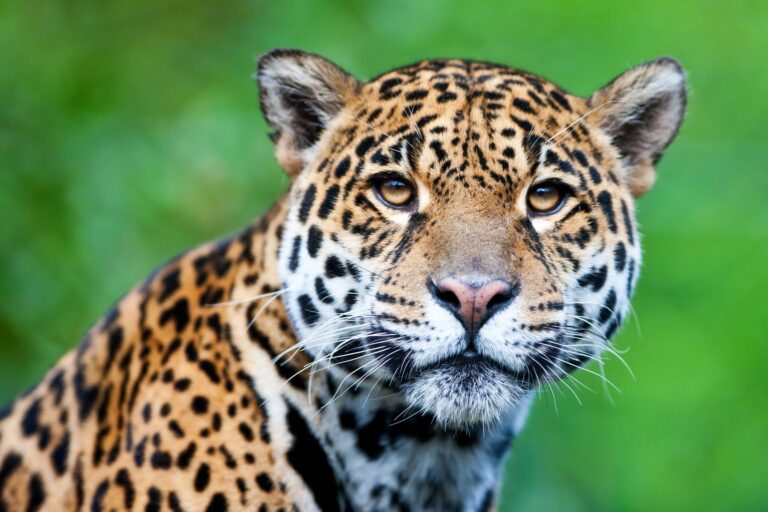
The forest supports extremely high biodiversity across plants and animals. Early surveys documented at least 1,251 plant species across 579 genera and 147 families, with many species still unrecorded. Fish diversity across the landscape includes over 400 recorded species, with estimates suggesting more than 700. Monitoring programs track birds, mammals, reptiles, amphibians, and insects across the landscape. Many species are unique to the region or newly recorded, reflecting its global importance. These outcomes are visible in the richness of wildlife encountered and the continued discovery of new species.
The ecosystems also perform essential functions that people rely on. Wetlands and flooded forests support fish breeding, nutrient flows, and ecosystem productivity. Rivers such as the Essequibo, Siparuni, Rupununi, Rewa, and Burro-Burro create seasonal cycles that sustain fisheries and food systems. Forest processes regulate water flows, store carbon, and maintain biodiversity. These services support tourism, subsistence activities, and broader environmental stability. Together, these outcomes show that the forest operates as a living system that sustains both nature and human use.
Iwokrama’s value comes from an intact, interconnected ecosystem that sustains biodiversity, livelihoods, and essential environmental services at scale.
Why partnerships matter in the Iwokrama forest.
Iwokrama operates through partnerships that are built into its legal and governance structure. National law requires the involvement and consultation of indigenous communities in forest management. The program itself is defined as a collaborative effort between Guyana and the international community. Governance includes an international board alongside government and community stakeholders. This structure ensures that decisions reflect multiple interests and knowledge systems. It also enables long-term continuity beyond short-term cycles.
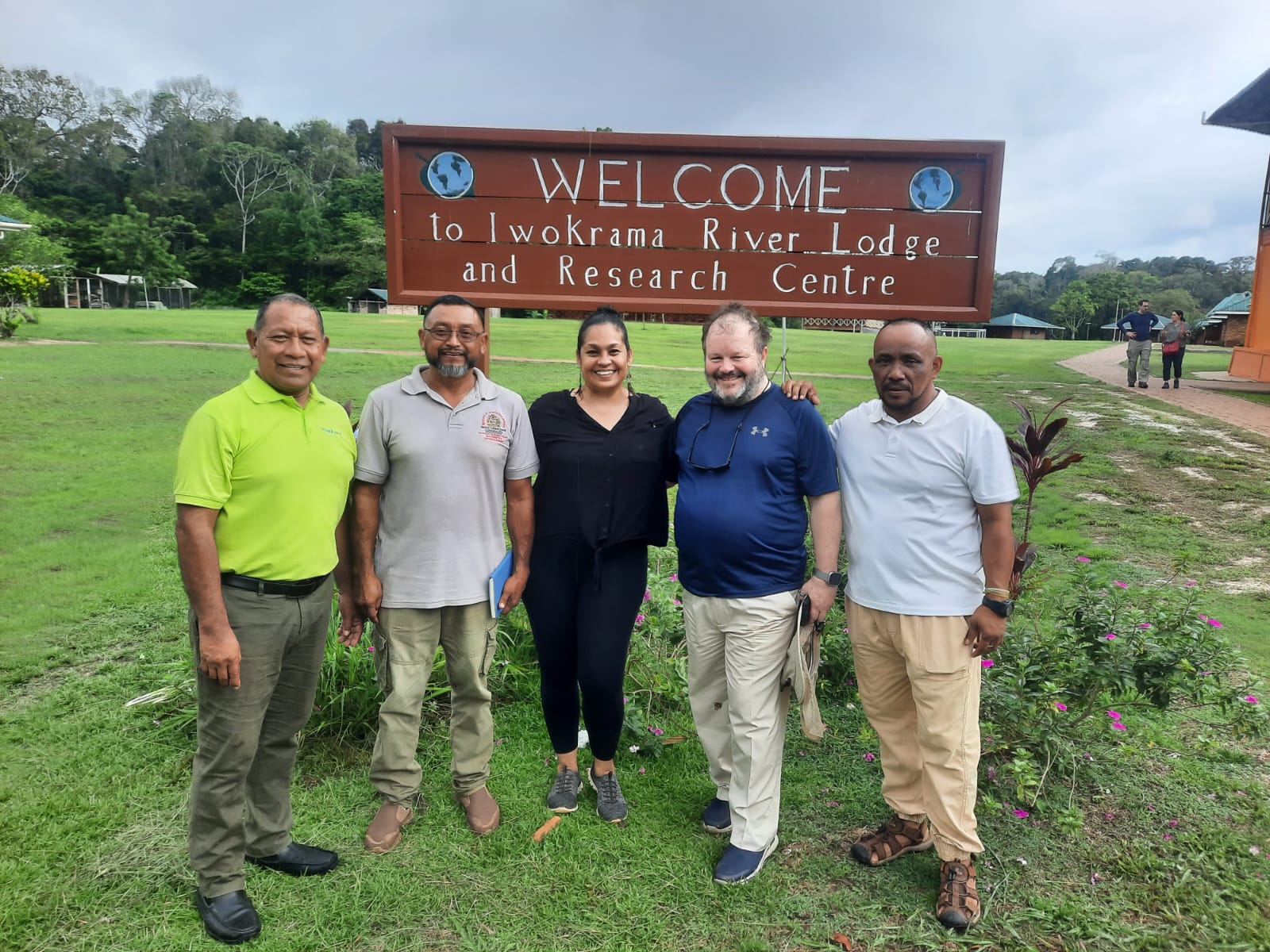
Local communities play a central role in managing and benefiting from the forest. Around 20 communities, representing approximately 7,000 people, participate as stakeholders and beneficiaries. These communities engage in monitoring, planning, and decision-making through organized bodies. They also engage directly in forest-based businesses such as timber and tourism. This shared role gives communities a direct stake in sustainable use and conservation outcomes. It turns forest management into a joint responsibility rather than an external imposition.
Partnerships also extend to scientific and international collaboration. Universities, research organizations, and international agencies contribute research, training, and funding. These collaborations support biodiversity monitoring, climate assessments, and knowledge generation. Private sector partnerships enable commercial activities such as value-added forestry and tourism operations. Together, these relationships combine science, finance, and local knowledge into a single system. This integrated approach enables the forest to function as both an economic asset and a conservation area.
Iwokrama works because governance, communities, science, and business are linked through structured, long-term partnerships.
What Iwokrama shows for national development.
Iwokrama shows that forests can support economic activity without losing biodiversity. The forest is divided into a Wilderness Preserve and a Sustainable Use Area to test different approaches. Sustainable timber harvesting uses selective, low-impact techniques as applied in most of Guyana. Certification standards verify that environmental and social requirements are met. These practices allow production while maintaining forest structure and ecological processes. This approach shows how conservation and use can coexist within a managed system.
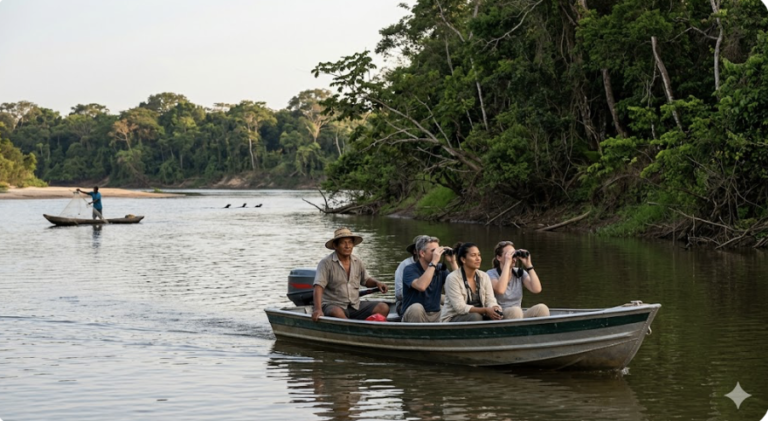
Ecotourism provides a clear example of how forests generate income while supporting conservation. The site attracts more than 1,500 visitors annually, generating income and creating employment opportunities. Tourism activities build local skills and provide direct economic benefits. At the same time, they promote awareness of biodiversity and conservation. This model links economic incentives to environmental protection. It shows how natural assets can be used to generate sustainable revenue streams.
The forest also plays a significant role in climate and environmental services. It stores approximately 115 million tons of carbon, helping stabilize the global climate. Monitoring systems track biodiversity, hydrology, and carbon as measurable assets. These services align with emerging environmental markets such as carbon and ecosystem services. The forest is also integrated into national development strategies, including low-carbon development planning. Iwokrama is both a national asset and a global model for sustainable development.
Iwokrama shows that forests can generate multiple revenue streams—timber, tourism, and ecosystem services—while maintaining ecological integrity.
Why the Iwokrama forest model matters for Guyana now.
Strengthening the Iwokrama model is a clear national priority. Integrated management allows forests to create value without being degraded. The result is a system where economic activity supports conservation rather than undermines it.
Guyana’s intact forest ecosystem provides the foundation for value creation. Structured partnerships ensure that people, institutions, and markets work together. Multiple revenue streams make the model financially and environmentally sustainable. Together, these elements create a system that balances development and conservation. This integrated approach defines the model’s strength.
The forest already delivers real benefits while remaining intact. Extending this model would increase income, improve environmental stability, and strengthen long-term resilience. Priority future actions include expanding integrated business models, strengthening community partnerships, and investing in monitoring systems. Without these steps, opportunities for sustainable growth could be lost. The core implication is clear: forests can support development, but only if they are managed as living systems rather than resources to be depleted.
Looking ahead, Iwokrama needs better evidence and stronger systems. Biodiversity data are still incomplete. Plant species may be underestimated by about 50 percent. Wetland ecosystems also need more study, because detailed analysis remains limited. Monitoring faces logistical and financial constraints. That limits steady tracking of biodiversity, carbon, and ecosystem services. Biodiversity valuation remains weak because market mechanisms for ecosystem services are still incomplete. For the policy and finance frameworks being developed to address these gaps across LAC, see Forestry Institutions in a New and Evolving Role at Watkins Advisory, and the broader institutional development context is examined in Guyana Reforms 1991–1996 at The Next Wave.
Explore the Rupununi
Dive deeper into the Rupununi’s natural and human world. Explore the region’s ancient geology and Guiana Shield, the remarkable wildlife of the Rupununi, the rich history of human settlement, and the living culture of the people of the Rupununi. Learn more about the authors behind this companion site, and follow the latest thinking on conservation and development in the Rupununi Blog.
Follow the Rupununi on Facebook for new stories, wildlife news, and updates from the book: facebook.com/rupununi.org
Discover more from Rupununi: Rediscovering a Lost World
Subscribe to get the latest posts sent to your email.