Village Consent Depends on Which Resource in Guyana
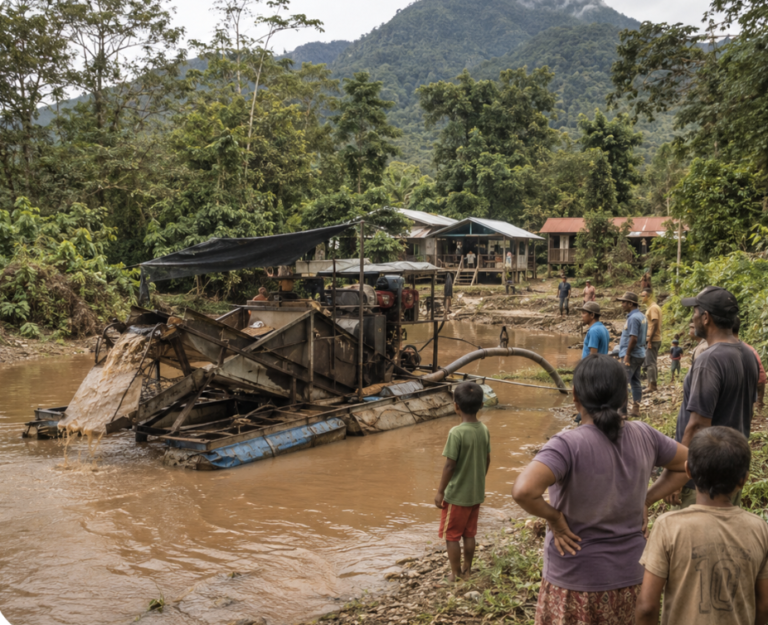
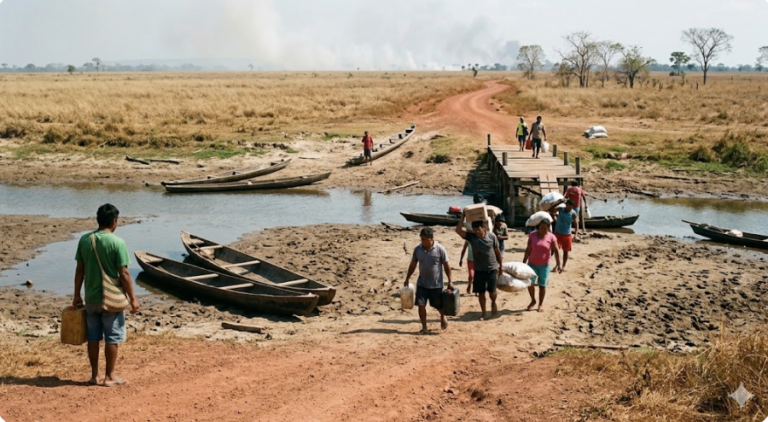
On September 7, 2026, the Guyana Geology and Mines Commission (GGMC) withdrew from mediation at Chinese Landing in Region 1. The specific reason for withdrawal was not given. This village has had title since 1976, and mining permits issued between 1998 and 2001 were resumed in May of this year. The Toshao indicated that the operators did not have permission from the village. The Minister of Natural Resources said legitimate mining holdings could continue, as the process had been aired in Guyana’s courts and before the Inter-American Commission on Human Rights. The process and public discussion address who must consent before mining begins on titled lands.
Tensions between state-owned subsoil rights and indigenous surface rights appear in every mining jurisdiction worldwide. Few countries give indigenous communities an unqualified veto that holds in practice. Canada’s courts, after Haida Nation (2004), ensure that the duty to consult is not a veto. The closest is Australia’s Aboriginal Land Rights (Northern Territory) Act 1976, which gives traditional owners a genuine veto over exploration. This blocks mining for five years and can be overridden only by a formal declaration of national interest. The Philippines’ Indigenous Peoples’ Rights Act (1997) makes free, prior, and informed consent (FPIC) a statutory precondition for concessions in ancestral domain with no override. However, some communities in the Philippines have indicated that they did not consent to processes documented as agreements.
Best FPIC mechanisms have eight elements. Consent is required at the time of licence award, not after permit issuance. FPIC is triggered by high-likelihood, high-impact events such as relocation, occupation, or impacts on cultural heritage. The community’s own institutions and processes decide. Withholding consent has a defined legal consequence. FPIC applies to renewals, expansions, or changes in scope. Agreements should be written, registered, and enforceable with revenue shares. Appeal routes should go beyond the permitting agency. Agreement frameworks scale to the spatial and temporal context of the impact rather than the scale of the ownership.
While working in safeguards, I encountered FPIC several times. The first time was through a Saramaka complaint from Suriname regarding the need for consent for large-scale infrastructure projects, which was addressed by the Inter-American Court of Human Rights. The issue also came up when considering multilateral development bank support for the Georgetown-Lethem Road and during negotiations over changes to the safeguards policy. I have written about apparent consultation failures in mining in the South Rupununi and possible oil extraction from the North Rupununi. This blog takes a closer look at Guyana’s existing consent requirements.
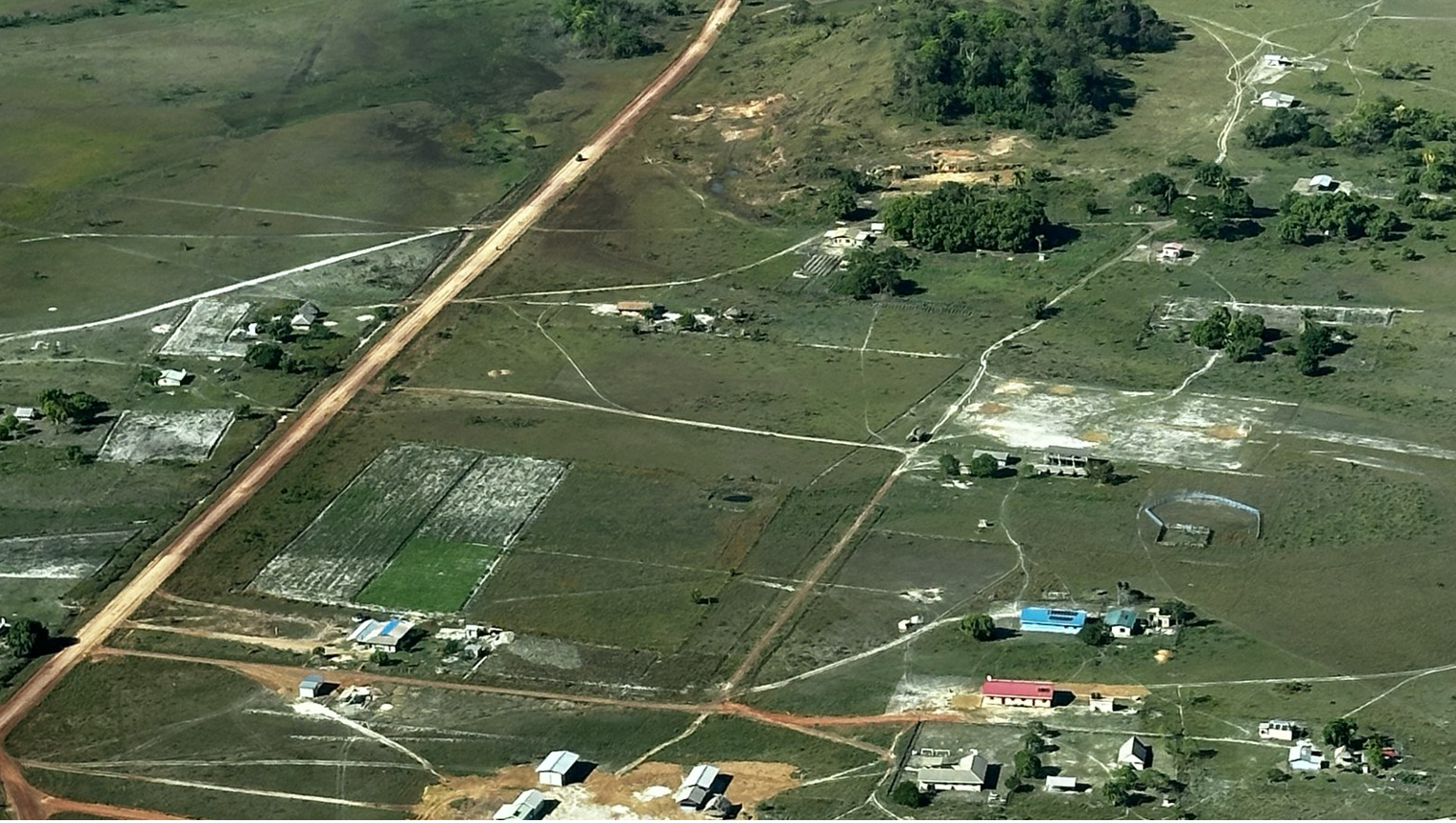
For the Rupununi villages, the most urgent question regarding consent is which types of development on their lands require consent under existing laws. This matters as the Georgetown-Lethem Road continues toward Lethem, with G$7.6 billion allocated to the Mabura-Kurupukari section in the 2026 budget. Agriculture, tourism, gold, and forest uses will come along that road as the oil boom expands its effects. Villages need clarity on consent rules and constraints. They also need a view on these rules and the proposed revisions to the Amerindian Act. Interestingly, mining projects have been halted in Guyana due to Indigenous concerns, including in Aranaputa (2025). The mechanism was ministerial suspension rather than statutory refusal of consent—a suspension that one Minister grants can be lifted by a new Minister.
Six statutes address consultation and consent.
Six different laws address resource use on Amerindian-titled lands. These were developed and written in different decades and for different resources. Beyond the statutes, Guyana has endorsed the United Nations Declaration on the Rights of Indigenous Peoples (2007) and the American Declaration on the Rights of Indigenous Peoples (2016). Guyana has not ratified the International Labour Organization (ILO) Convention 169. The Constitution gives indigenous peoples the right to protection, preservation, and promulgation of their languages, cultural heritage, and way of life. The National Toshaos Council (NTC) is drafting FPIC guidelines, but the July 2026 NTC conference did not approve anything. District and village councils should determine which rules apply and whether any outstanding permits were issued before 2006. The strongest consent requirements apply only to small- and medium-scale mining. This likely results from the Acts being drafted separately in 1989, 2006, and 2023.
The Amerindian Act 2006 requires consent. The level of consent depends on the available resources and the thresholds for action. Small and medium mining needs two-thirds of those present at a village general meeting to approve a written agreement with at least 7% tribute. Notice, consultation, and good-faith negotiation are part of the process. Leases of village land require 75% approval for non-residents and 51% for residents.
The Amerindian Act does not address legacy permits issued before 2006; the High Court held that holders of legacy permits are not bound by it. The Amerindian Act also protects traditional use rights over State lands and State forests – but subordinates these rights to existing leases. The 2017 land titling guideline for the Amerindian Act writes FPIC into titling, which proceeds on the request of two-thirds of the adult population. Titling therefore requires FPIC in Guyana.
The Mining Act 1989 vests “all minerals within the lands of Guyana” in the State. For mining, GGMC must notify the village and ensure the impact will not be harmful before permitting work on or adjacent to village lands. The Amerindian Act allows the two Ministers to override a village refusal in the public interest, leaving the village the right to require negotiation. The National Toshaos Council resolved in 2018 to ask GGMC to stop granting concessions on titled lands.
The village of Chinese Landing terminated a 1998 agreement in August 2004. However, the permits were issued before 2006 and renewed in 2018 after the GGMC’s 2010 cease order was quashed. The village’s suit was dismissed in 2021, while the Inter-American Commission issued precautionary measures in 2023, followed by the government’s announcement of a halt. The case continues.
Petroleum and environmental laws do not require consent.
The Petroleum Activities Act 2023 vests petroleum in the State and requires no negotiation with villages. The only control would be a general rule requiring a licensed operation to have the written consent of the landowner or lawful occupier of land that is not State land. The Environmental Protection Act 1996 requires consultation and public hearings, not consent. The Forests Act 2009 excludes Village Lands from State Forest and preserves pre-existing sustainable non-commercial uses in State Forest. A two-thirds vote also applies to the extraction of forest produce by non-residents when the Guyana Forestry Commission issues its permit.
The Protected Areas Act 2011 has a strong consultation code. The Minister must identify potentially affected Amerindian communities or villages and their traditional rights, provide public notice inviting rights-holders’ comments, and investigate rights and claims. Consent is required if the village applies, by village resolution, to make its own lands an Amerindian Protected Area.
The carbon route requires two-thirds of the village’s votes.
Carbon finance flowed under the Norway memorandum of understanding and earlier versions of the Low Carbon Development Strategy (LCDS). The arrangement covered only the State Forest; Amerindian lands lay outside it. The opt-in mechanism (2009-2019) proposed under this agreement was never finalised. It was replaced by a jurisdictional approach described in the LCDS 2030 and the 2022 REDD+ Environmental Excellence Standard (TREES) of the Architecture for REDD+ Transactions (ART), which included village lands by default and therefore in revenue-sharing.
The NTC decided if and how villages should enter the carbon sales scheme. The NTC endorsed the carbon-sharing route in 2022 and again in 2024. The carbon route is more a decision about how to spend resources than whether the village should enter the process. The Amerindian People’s Association and Kako’s former Toshao raised concerns that villages had no choice about entry. The Government has indicated that the Amerindian Act sets the NTC as the representative body for broader decisions. In 2023, the ART Secretariat said that Guyana had complied with the process. However, it deferred the question of whether the NTC has the authority to decide that all villages should enter the process.
Villagers vote on spending, not entry.
The 2022 “carbon route” requires two-thirds of those present at a general meeting to approve carbon sales. The village vote decides how to spend the funds. All adults can vote, and two-thirds of those present at the village meeting decide. The village can transfer funds only if it has a separate bank account, a finance committee, a Village Plan, and a general meeting that approves the priorities. The plan with signed minutes is filed with the Ministry of Amerindian Affairs to allow transfers to take place.
The process is documented in the Hess agreement and the Ministry procedures, but it is not statutory. Putting these carbon rules into legislation would protect them from future changes in government. A minor discrepancy exists between the access steps process, which says majority, and the fact sheet, which says two-thirds. As a result, G$14.4 billion has been transferred to 248 villages from 2023 to 2025 to support over 1,700 projects. This means that every village council has now held a two-thirds vote, kept minutes, and opened an account for carbon money. Could a similar approach work for mining, tourism, or agricultural development?
Peru and Colombia show that consultation laws can scale.
Peru and Colombia implement consultations on state-owned subsoil rights at the national scale. Both have adopted ILO 169-compliant systems but built them differently. Peru codified the procedure in statute, while Colombia uses a court-driven process. In Peru, Law 29785 is the legal basis, regulated by Supreme Decree 001-2012-MC, and the process is triggered by administrative or legislative measures that directly affect collective rights. Peru’s Ministry of Energy and Mines runs the consultations, with the Ministry of Culture serving as the technical authority. Consultation begins after the concession is issued.
In Colombia, the legal basis is the Constitution and the ratification of ILO Convention 169, with some regulated consultation procedures for resource extraction. As in Peru, the consultation takes place during environmental licensing—after the title for extraction is issued— and focuses on mitigation, compensation, and conditions. Peru and Colombia both consult after the concession is awarded. Consent can shape mitigation and compensation rather than a go/no-go decision.
Peru and Colombia run at scale but do not decide outcomes.
Peru has conducted 115 prior-consultation processes since 2013, of which 71 resulted in agreement. Colombia has run over 13,000 processes since 2011. In Peru, there are concerns that the processes are bureaucratic hurdles rather than real decision-making. In Colombia, only 16 percent of cases have reached agreement, and many stall for more than four years. Peru’s challenge is that the decision-making process is not tightly tied to the consultation, while Colombia’s lesson is that the result is often bureaucratic paralysis. Guyana’s legislation reflects real tensions: state ownership of subsurface rights, surface title, village voting, and ministerial overrides. Reconciling these may not protect indigenous rights. Additional challenges arise when extraction is authorized on untitled lands over which claims exist, as in the case of Marudi and the South Rupununi District Council.
The road will test all the rules.
The Georgetown-Lethem Road will likely bring a series of issues similar to those in Chinese Landing and Marudi, related to subsurface oil, gold, tourism, and agriculture. Questions include whether the procedures for the entry into and continuation of external interventions on village lands should be contained in a single piece of legislation or spread across multiple pieces of legislation. What should happen to permits for sub-surface resource use issued before the Amerindian Act is revised – should permit renewals be subject to the revised procedures?
When the NTC approves FPIC guidelines, should they include the entry vote as well as the need to vote inside the village against plans and financial flows? Should the permitting processes cover all forms of sub-surface intervention, including mining and petroleum, and should the voting extend regionally where impacts are likely to be regional rather than village-specific? The village meeting minutes should be filed before permits are issued. The consultation procedure should match the scale of impact to the scale of agreement. This can be time-consuming; only 16% of Colombia’s consultations reach agreement, and many run for more than 4 years. If the impacts are regional, affecting wetlands or forests used by several villages, then the agreement should be regional.
The Chinese Landing case will turn on clear rules for grandfathering agreements and permits that predate the statutes.
Discover more from Rupununi: Rediscovering a Lost World
Subscribe to get the latest posts sent to your email.